
What Is Lumbar Fusion?
Chronic lower back pain can feel like an anchor, pulling you away from the activities and people you love. When non-surgical treatments like injections or physical therapy no longer provide a bridge to relief, a spine doctor may recommend a more structural solution. At Central Texas Spine Institute, we view lumbar fusion surgery as a powerful tool to stabilize the spine and silence the mechanical pain that disrupts your daily life.
By joining two or more vertebrae into a single, sturdy unit, this procedure stops the painful friction caused by unstable spinal segments. As a leading spine specialist team, our goal is to help you navigate this transition with clarity and confidence. Here are six critical points to help you understand the journey of lumbar surgery. Get in touch today.

Pinpointing the Need for Stability
A back doctor typically suggests fusion when your spine has lost its structural integrity. Whether it is due to spondylolisthesis (a slipped vertebra), severe degenerative disc disease, or a recurring herniated disc, the goal is to stop “micro-motion.” This unintended movement irritates nerves and causes deep, aching pain that only back fusion surgery can truly address by providing a permanent internal brace.

The Fusion Process Explained
Think of lumbar spine surgery as a biological “weld.” Your spine surgeon removes the damaged disc that is causing instability and replaces it with a spacer or “cage” filled with bone graft material. Over several months, your body heals by growing new bone across this gap, eventually fusing the vertebrae into one continuous bone that can safely support your body’s weight.
Advanced Instrumentation
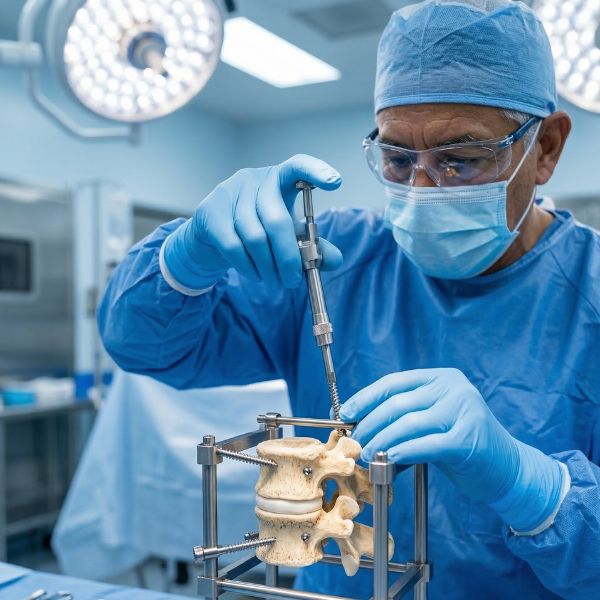
To ensure the bones stay perfectly still during the months it takes for the fusion to “set,” we use high-quality hardware. This typically includes titanium screws and rods. This internal support system provides immediate stability, often allowing you to begin walking and light activity much sooner than in decades past, as the hardware holds the spine in the correct alignment from day one.
Precision Approaches
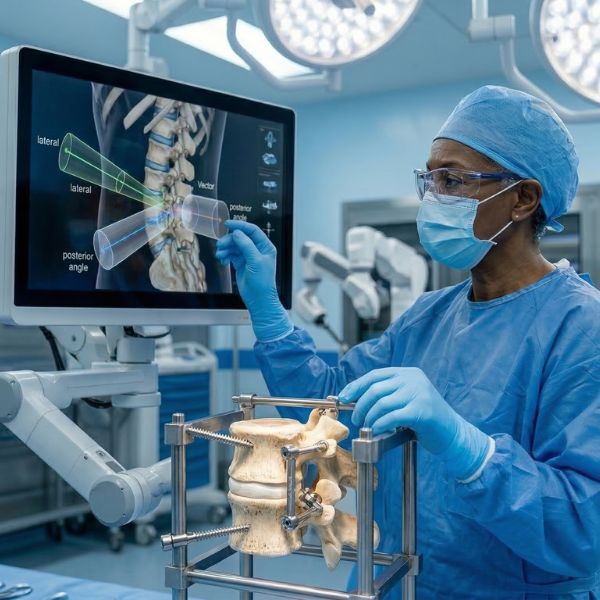
Every patient is unique, which is why an Austin orthopedic surgeon will choose the most effective “path” to your spine. Depending on your specific anatomy, we may use an anterior (from the front), posterior (from the back), or lateral (from the side) approach. Many of these techniques are now minimally invasive, focusing on preserving the surrounding muscle tissue to speed up your recovery time.

The Role of Bone Grafts
Success depends largely on the “bridge” created between the vertebrae. We use various types of bone grafts—sometimes your own bone, sometimes donor bone, or synthetic proteins—to jumpstart your body’s natural healing process. This graft acts as a scaffold, guiding new bone growth until the fusion is complete and the segments are no longer moving independently.

Life After Fusion
A common misconception is that a spinal fusion will leave you feeling completely rigid. In reality, most patients report a significant increase in overall function. Because the debilitating pain is removed, you can often move your hips and upper back more effectively. Most patients return to their favorite hobbies, from gardening to golf, once the spine specialist clears them for full activity.
Get Started Today
Choosing lumbar fusion surgery is a step toward taking back control of your physical freedom. By eliminating the source of instability, we help you build a stronger foundation for the years ahead. At Central Texas Spine Institute, our team is committed to guiding you through every step of this process, ensuring you have the support of a dedicated back doctor from consultation to full recovery. Get in touch today.
